
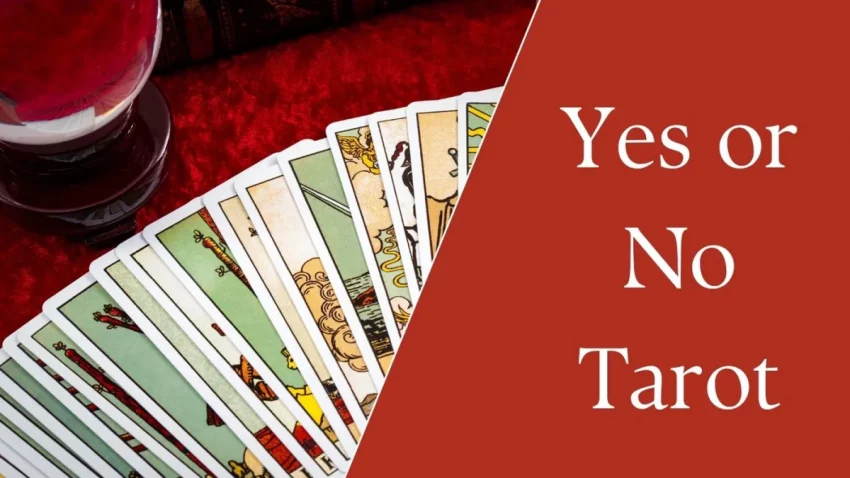
Yes or No Tarot: The Ancient Art of Getting a Straight Answer
There’s a particular kind of restlessness that comes with not knowing. You’ve turned the question over in your mind so many times that the words themselves start to lose meaning — should I take the job, is it really over, will things work out — and no amount of overthinking seems to bring you closer to an answer. This is exactly the space where Yes or No Tarot lives: a simple, direct method of divination built for moments when you don’t need a sprawling narrative, you just need clarity.
What Makes Yes/No Tarot Different
Traditional tarot readings often unfold like stories — past, present, future, hidden influences, likely outcomes — woven together across several cards into a fuller picture. That depth has its place, but it isn’t always what a person needs. Sometimes the real value lies in speed and precision: one card, one focused question, one clear response.
That’s the appeal of a Yes or No Tarot reading. You hold your question in mind, draw a single card from the full 78-card deck, and the card’s traditional meaning points you toward a “yes,” a “no,” or — in cases where the energy is unsettled — a “maybe” that invites you to pause rather than push forward blindly.
Cards like The Sun, The Star, or The World tend to carry an unmistakably positive charge — success, hope, fulfillment. Cards like The Tower or The Devil, on the other hand, tend to signal caution, disruption, or a warning worth heeding. And then there are the in-between cards — The High Priestess, The Moon, The Hanged Man — which don’t resolve neatly into either camp. They ask you to wait, to look closer, or to trust that the timing isn’t quite right yet.
Why People Turn to a Quick Tarot Reading
It might be tempting to dismiss a one-card reading as “tarot lite,” but that misses the point. A well-formed Yes or No question, asked with real focus, can cut through hours of circular thinking in the time it takes to draw a single card. It’s not meant to replace a deeper reading — it’s meant to give you an honest gut-check when your mind is too tangled to give you one on its own.
This is part of why free tools like the Yes or No Tarot – Free Online Tarot Reading have found such a devoted audience. There’s no need to book a session or wait for a response — you simply sit with your question, draw your card, and see what comes back. For someone standing at a small crossroads — should I send that message, is this the right week to make a decision — that immediacy matters.
How to Ask a Question the Cards Can Actually Answer
The accuracy of any Yes/No tarot reading depends heavily on the question itself. Vague, sprawling questions produce vague, sprawling answers — or none at all. A few principles tend to make the biggest difference:
- Keep it to one topic. “Should I change jobs and move to a new city?” is really two questions pretending to be one. Split it in two.
- Phrase it as genuinely closed. “Will I be happy?” has no clean yes or no. “Will this decision bring me more peace than staying where I am?” does.
- Come to it honestly. If you already know the answer and are only looking for the cards to agree with you, that’s worth noticing before you draw.
- Resist the urge to re-draw. If the card you get isn’t the one you hoped for, drawing again and again in search of a better answer usually just muddies the water. A more useful next step is reframing the question — “what can I do to influence this?” — and turning to a fuller three-card spread if you want that kind of depth.
A Tool for the Moment, Not the Whole Journey
It’s worth saying plainly: a single card is a snapshot, not a verdict. Tarot, in any form, isn’t meant to override your own judgment — it’s meant to sharpen it, offering a symbolic mirror for whatever you’re already sensing but haven’t quite put into words. When the question at hand is small and immediate, a Yes/No draw is often exactly the right amount of insight. When it’s layered — a complicated relationship, a major career shift, something with real weight — a fuller reading, with several cards working together, tends to serve you better.
That flexibility is part of what makes tarot such an enduring practice. It scales to the size of the question you’re actually carrying, whether that’s a fleeting “should I send this text” or something you’ve been sitting with for months.
If you’ve never tried it, there’s very little to lose in giving it a moment: focus your mind, ask something specific, and see what the card gives back. Sometimes the real value isn’t even the answer itself — it’s the pause it forces you to take, the moment of stillness before you decide.