
For decades, developers have faced the same challenge: convincing buyers to invest in properties that have not yet been built. While floor plans, architectural drawings, and renderings can provide valuable information, they often leave buyers with unanswered questions. What will the surroundings look like? How spacious will the apartment feel? What view can be expected from a particular floor?
As competition in the real estate market grows, developers are looking for new ways to answer these questions before they become objections. Advanced visualization technologies are emerging as one of the most effective solutions, helping buyers experience a property long before construction is completed.
The challenge of selling a vision
When a development exists only on paper, buyers must rely heavily on imagination. Even the most detailed plans may not fully communicate the atmosphere, scale, or practical layout of a future property.
This creates uncertainty, especially for buyers making significant financial commitments. The inability to visualize the finished investment can slow down decision-making and increase the likelihood that prospective clients will continue searching elsewhere.
Developers therefore need tools that transform concepts into experiences and make future projects easier to understand.
Why visualization influences purchasing decisions
People naturally process visual information faster than written descriptions or technical documentation. When buyers can clearly see how a property will look and function, they gain a deeper understanding of the investment and feel more comfortable evaluating its potential.
Visualization also helps buyers compare different apartments, building locations, and project features. Instead of relying on abstract specifications, they can assess options based on realistic representations of the future development.
This creates a more engaging and efficient purchasing journey.
Moving beyond static presentations
Traditional renderings remain useful, but modern buyers increasingly expect interactive experiences. They want to explore properties rather than simply view images. This shift is driving demand for solutions that allow users to navigate developments, examine details, and better understand the relationship between buildings, amenities, and surrounding areas.
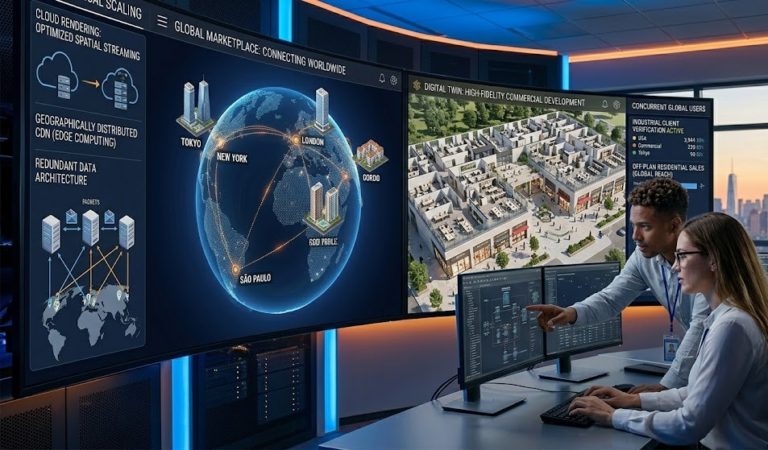
A Photorealistic 3D Real Estate App enables developers to present projects in a more immersive way. By combining realistic graphics with interactive functionality, these platforms help transform property marketing from a passive presentation into an active exploration experience.
The result is a stronger connection between buyers and the development itself.
Supporting sales throughout the entire buyer journey
Property purchases rarely happen after a single interaction. Buyers often spend weeks or months researching options, comparing developments, and discussing decisions with family members or financial advisors.
Interactive 3D tools support every stage of this process. Prospective clients can revisit projects whenever they choose, explore different units, and gain a clearer understanding of available options without requiring constant assistance from sales teams.
This accessibility helps maintain buyer engagement and keeps developments at the forefront of consideration.
Creating a competitive advantage for developers
As more residential projects enter the market, differentiation becomes increasingly important. Developers that provide modern, transparent, and engaging presentations are often better positioned to attract attention and generate qualified leads.
Innovative visualization technologies demonstrate a commitment to customer experience while helping communicate the value of an investment more effectively. This can strengthen brand perception and improve overall marketing performance.
In many cases, the quality of a project’s presentation can influence buyer perception just as much as the project itself.
The future of real estate marketing
Digital transformation continues to reshape the property sector. Buyers expect greater convenience, richer information, and more realistic ways to evaluate future homes. Developers who adapt to these expectations are likely to gain a meaningful advantage in an increasingly competitive marketplace.
Photorealistic and interactive property experiences are becoming a natural extension of modern real estate marketing. They help reduce uncertainty, improve buyer understanding, and create stronger engagement throughout the sales process.
As technology continues to evolve, immersive visualization tools will play an increasingly important role in how developers present, market, and ultimately sell residential properties.